

Corydoras pygmaeus – Pygmy Corydoras – 1 to 1.5 cm images
Corydoras pygmaeus – Pygmy Corydoras – 1 to 1.5 cm
Price:
€5.65
VAT included
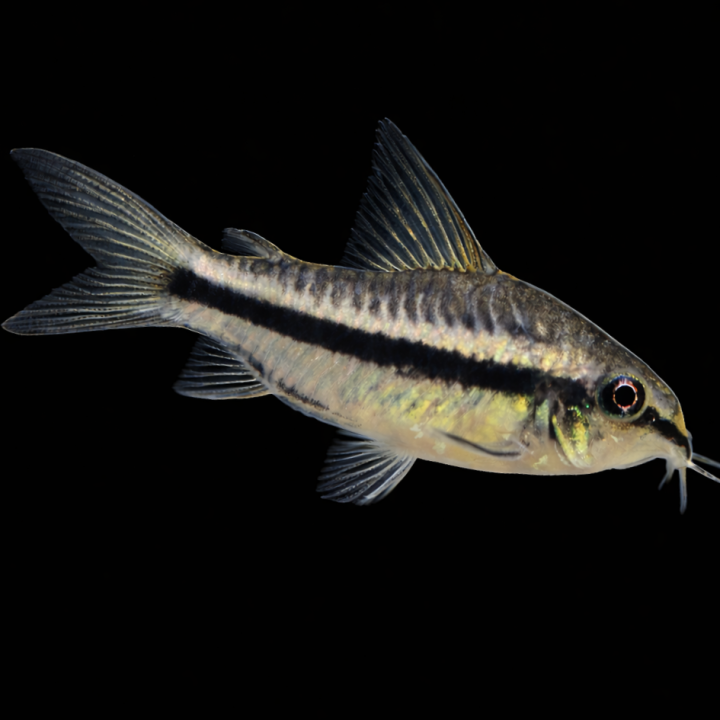
Corydoras pygmaeus, commonly known as the Pygmy Corydoras, is one of the smallest Corydoras kept in aquariums. Its pale to silvery-grey body is marked by a distinctive dark horizontal stripe along the flanks.
Very peaceful and sociable, it should be kept in a group of at least 6 individuals, ideally 10 or more. Unlike many Corydoras, it does not remain exclusively on the bottom and regularly swims in the middle levels of the aquarium.
The specimens offered are approximately 1 to 1.5 cm. Adults generally reach around 2 to 3 cm.
Recommended parameters: temperature 22 to 26 °C – pH 6 to 7.5 – soft to moderately hard water.
Corydoras pygmaeus – Pygmy Corydoras
Corydoras pygmaeus, commonly known as the Pygmy Corydoras, is a tiny, sociable fish native to South America. It is now also classified under the scientific name Gastrodermus pygmaeus.
Its pale to silvery-grey body features a distinctive dark horizontal stripe running along the flanks. Its extremely small size and active group behaviour make it a particularly interesting species for smaller, suitably established aquariums.
The specimens offered here are approximately 1 to 1.5 cm.
Adult Size of the Pygmy Corydoras
Corydoras pygmaeus is a miniature species. Adults generally reach around 2 to 3 cm.
Adult females are usually slightly larger and have a more rounded abdomen than males.
A Sociable Fish to Keep in a Group
Corydoras pygmaeus is a highly sociable, shoaling fish and should not be kept alone.
A group of at least 6 individuals is necessary, although keeping 10 or more individuals is particularly recommended when aquarium size allows.
In a sufficiently large group, the fish are generally more confident and display more of their natural social behaviour.
A Corydoras That Also Swims in Midwater
Corydoras pygmaeus behaves somewhat differently from many larger Corydoras species.
Although it regularly explores the substrate in search of food, it also frequently swims in the middle levels of the aquarium. Groups may swim together in open water before returning to explore the bottom, plants and other parts of the aquarium.
What Size Aquarium Does Corydoras pygmaeus Need?
Despite its very small size, Corydoras pygmaeus is an active and sociable species. An aquarium with a footprint of approximately 45 × 30 cm minimum provides a good basis for keeping a group.
A planted aquarium with open swimming areas, roots and shaded areas is particularly suitable.
The substrate should be fine and non-abrasive. Fine sand is especially suitable for its natural feeding and foraging behaviour.
Water Parameters
Temperature: 22 to 26 °C
pH: 6 to 7.5
Water: soft to moderately hard
Nitrite: 0 mg/L
Nitrite should remain undetectable. Clean, stable and properly filtered water is particularly important for such small fish.
Feeding Corydoras pygmaeus
Corydoras pygmaeus has an omnivorous diet with a strong animal component.
Because of its very small mouth, food should be appropriately sized. It readily accepts micro-pellets and finely prepared foods suitable for small aquarium fish, as well as suitably sized live and frozen foods.
Artemia nauplii, small Daphnia and other suitably sized foods can be used to provide a varied diet.
Corydoras pygmaeus should not be regarded as a “cleaner fish”. It requires a complete diet specifically provided for it.
Behaviour and Compatibility
Corydoras pygmaeus is a very peaceful fish. However, because of its tiny size, tank mates should be chosen carefully.
It is best kept with small, peaceful fish with similar water requirements. Much larger or very active fish may intimidate it, compete with it for food or, in some cases, regard it as prey.
It can also coexist with certain freshwater shrimp in a suitably arranged aquarium.
Like other Corydoras, it may occasionally swim rapidly to the surface to take in a small amount of air. This is normal behaviour.
Breeding Corydoras pygmaeus
Corydoras pygmaeus is an egg-laying fish.
During breeding, the female holds a small number of eggs between her pelvic fins while they are fertilised before attaching them to a suitable surface.
The adhesive eggs may be deposited on plants, aquarium glass or other surfaces.
The adults provide no parental care. For controlled breeding, the eggs or breeding adults can therefore be separated.
Origin of Corydoras pygmaeus
Corydoras pygmaeus is native to South America, more specifically the Rio Madeira basin.
In its natural habitat, it can occur in large groups, particularly in small tributaries, streams, quieter areas and habitats with marginal vegetation.
Lifespan
Under suitable aquarium conditions, Corydoras pygmaeus can live for approximately 5 to 6 years.
Conservation Status
Corydoras pygmaeus, currently classified under the scientific name Gastrodermus pygmaeus, is listed as LC – Least Concern on the IUCN Red List.
Never Release Aquarium Fish into the Wild
Aquarium fish must never be released into a river, pond, lake or any other natural environment, in order to protect natural ecosystems and wildlife.
Key Facts About Corydoras pygmaeus
- common names: Corydoras pygmaeus and Pygmy Corydoras;
- current scientific name: Gastrodermus pygmaeus;
- former scientific name: Corydoras pygmaeus;
- size offered: 1 to 1.5 cm;
- adult size: approximately 2 to 3 cm;
- origin: Rio Madeira basin, South America;
- tiny, peaceful and sociable fish;
- group of at least 6 individuals, ideally 10 or more;
- regularly swims in midwater as well as along the bottom;
- fine, non-abrasive substrate recommended;
- temperature: 22 to 26 °C;
- pH: 6 to 7.5;
- small food items required;
- egg-laying reproduction;
- lifespan: approximately 5 to 6 years;
- IUCN status: LC – Least Concern.
-
In stock25 Items
4 other products in the same category
Viewed products
- On sale!

Clients also bought
Comments (0)
Your review appreciation cannot be sent
Report comment
Report sent
Your report cannot be sent