<h3>Neocaridina davidi Red Cherry: the Essential Red Aquarium Shrimp</h3>
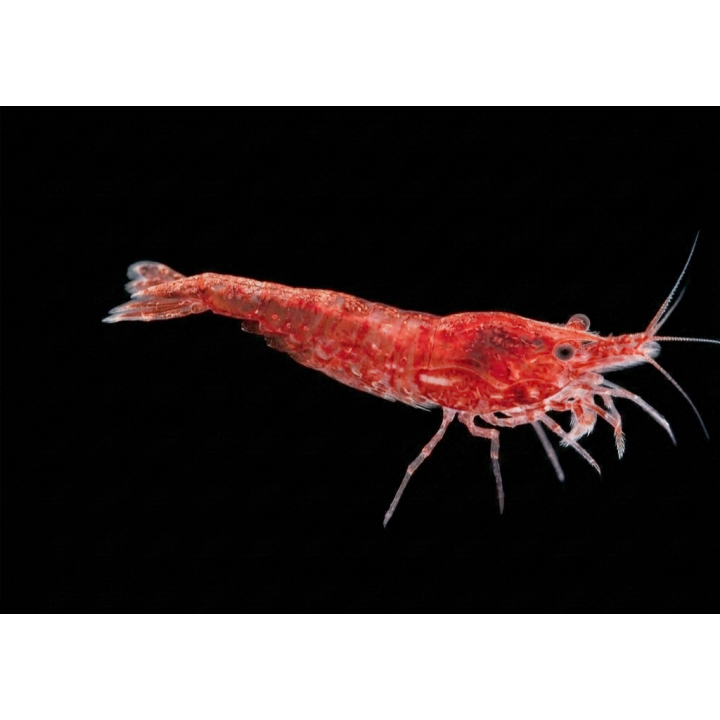
<p>The <strong>Neocaridina davidi Red Cherry</strong> is certainly one of the best-known and most popular freshwater shrimp in the aquarium hobby. Its red colouration, small size and relatively easy care make it an excellent shrimp for discovering freshwater shrimp keeping.</p>
<p>Selectively bred from <em>Neocaridina davidi</em>, the Red Cherry displays red colouration whose intensity can vary according to the individual, sex, age and quality of the selected line. Adult females are generally larger, more robust and more intensely coloured than males.</p>
<p>Active throughout the day, this small shrimp spends much of its time exploring plants, mosses, roots, stones and other aquarium surfaces in search of biofilm and food.</p>
<h3>Red Cherry Shrimp Care</h3>
<p>The <strong>Red Cherry Shrimp</strong> is renowned for its hardiness and ability to adapt to a range of aquarium conditions. However, it benefits above all from a properly cycled aquarium and stable water parameters.</p>
<p><strong>Scientific name:</strong> <em>Neocaridina davidi</em><br />
<strong>Variety:</strong> Red Cherry<br />
<strong>Adult size:</strong> approximately 2.5 to 3 cm<br />
<strong>Recommended temperature:</strong> approximately 18 to 26°C<br />
<strong>pH:</strong> approximately 6.5 to 8<br />
<strong>Hardness:</strong> soft to moderately hard water<br />
<strong>Diet:</strong> omnivorous and detritivorous<br />
<strong>Behaviour:</strong> peaceful and social<br />
<strong>Difficulty:</strong> easy<br />
<strong>Breeding:</strong> easy in freshwater</p>
<p>Sudden changes in temperature or water parameters should be avoided. Like other shrimp, Neocaridina are also sensitive to certain substances, particularly copper found in some aquarium treatments.</p>
<h3>What Aquarium Is Suitable for Red Cherry Shrimp?</h3>
<p>The <strong>Red Cherry Neocaridina</strong> is particularly well suited to planted aquariums and nano aquariums.</p>
<p>An aquarium containing mosses, aquatic plants, roots, stones and leaves provides numerous surfaces on which the biofilm naturally consumed by shrimp can develop.</p>
<p>Mosses and dense vegetation also provide excellent hiding places for juvenile shrimp.</p>
<p>Although Neocaridina can live in relatively small aquariums, a larger volume generally provides greater stability. Stable water conditions are more important than trying to keep them in the smallest possible aquarium.</p>
<p>The aquarium must be properly cycled before the shrimp are introduced.</p>
<h3>What Do Red Cherry Shrimp Eat?</h3>
<p>The <strong>Red Cherry Shrimp is omnivorous and detritivorous</strong>. It spends much of its time grazing on biofilm, micro-organisms, certain microalgae and various forms of organic matter found in the aquarium.</p>
<p>In a mature aquarium, it therefore naturally finds part of its diet.</p>
<p>Food specifically formulated for freshwater shrimp can supplement these natural resources and provide nutrients required for growth, moulting and reproduction.</p>
<p>A varied diet can include complete shrimp foods as well as suitable plant-based supplements for freshwater invertebrates.</p>
<p>It is preferable to feed small quantities. Overfeeding causes waste to accumulate and can quickly reduce water quality.</p>
<h3>Do Red Cherry Shrimp Clean the Aquarium?</h3>
<p>The <strong>Red Cherry Shrimp</strong> is often described as an aquarium cleaning shrimp. It does contribute to the consumption of biofilm, certain microalgae and small amounts of leftover food.</p>
<p>It can therefore play a useful role in a balanced aquarium.</p>
<p>However, Red Cherry Shrimp do not replace regular aquarium maintenance. Water changes, filter maintenance and monitoring water quality remain essential.</p>
<h3>Breeding Neocaridina davidi Red Cherry</h3>
<p><strong>Red Cherry Shrimp are relatively easy to breed in the aquarium</strong> when suitable conditions are provided.</p>
<p>After mating, the female carries the eggs beneath her abdomen and regularly fans them until they hatch.</p>
<p>The young hatch directly as tiny shrimp and do not pass through a larval stage requiring saltwater. The entire reproductive cycle can therefore take place in freshwater.</p>
<p>A mature aquarium rich in mosses, plants and microfauna improves juvenile survival by providing both food and hiding places.</p>
<p>It is also advisable to protect the filter intake with a fine sponge to prevent juvenile shrimp from being drawn into the filter.</p>
<h3>Differences Between Male and Female Red Cherry Shrimp</h3>
<p><strong>Female Red Cherry Shrimp</strong> are generally larger and more robust than males. Their abdomen is also broader and more rounded to accommodate the eggs.</p>
<p>Adult females often display more intense red colouration, while males may be smaller, slimmer and sometimes more translucent.</p>
<p>In mature females, it may sometimes be possible to see an area behind the head corresponding to the ovaries before fertilisation.</p>
<h3>Can Red Cherry Shrimp Be Kept with Fish?</h3>
<p>Compatibility between <strong>Red Cherry Shrimp and fish</strong> depends greatly on the fish species.</p>
<p>Many fish may consider small shrimp, and especially juveniles, to be prey. Even an apparently peaceful fish may eat a young shrimp if it is small enough to fit into its mouth.</p>
<p>For establishing a large Red Cherry colony, a dedicated shrimp aquarium therefore remains the safest option.</p>
<p>In a community aquarium, dense vegetation, mosses and numerous hiding places can reduce the risk of predation, although they cannot eliminate it completely.</p>
<h3>How Many Red Cherry Shrimp Should You Start With?</h3>
<p>Neocaridina are social shrimp. It is preferable to start with <strong>a group of several individuals</strong> rather than one or two isolated shrimp.</p>
<p>A sufficiently large group also increases the chances of having both males and females, making it easier to establish a colony.</p>
<p>When conditions are favourable, Red Cherry Shrimp reproduce regularly and the population gradually increases.</p>
<h3>Can Red Cherry Shrimp Be Mixed with Other Neocaridina?</h3>
<p>Different colour varieties of <strong>Neocaridina davidi can reproduce with one another</strong>.</p>
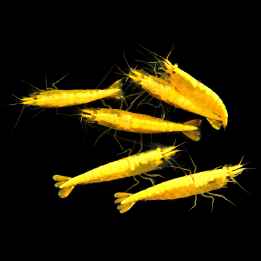
<p>It is therefore possible to keep Red Cherry, Blue Velvet, Yellow Fire and other Neocaridina varieties together, but this is not recommended when the aim is to maintain stable colouration.</p>
<p>Over successive generations, crossbreeding between different selected varieties can result in reduced colour intensity and the appearance of individuals with colouration closer to the wild type.</p>
<p>To maintain a strong red line, it is preferable to keep <strong>Red Cherry Shrimp separately from other Neocaridina colour varieties</strong>.</p>
<h3>Buy Red Cherry Shrimp Online</h3>
<p>The <strong>Neocaridina davidi Red Cherry</strong> is an excellent choice for aquarists looking for a red freshwater shrimp that is hardy and relatively easy to keep.</p>
<p>Its colouration, constant activity and ease of breeding make it possible to gradually establish a thriving colony in a suitable aquarium.</p>
<p>NeoTropic offers <strong>Red Cherry Shrimp for sale online</strong>, selected for freshwater aquariums. Availability may vary depending on breeding stocks and the time of year.</p>
<p>The shrimp should be carefully acclimatised to their new aquarium to minimise sudden differences in temperature and water parameters.</p>
<p><strong>Never release aquarium shrimp into the natural environment.</strong></p>



Comments (0)
Your review appreciation cannot be sent
Report comment
Report sent
Your report cannot be sent