Neocaridina davidi Sakura XL: a Large Red Shrimp That Is Immediately Visible
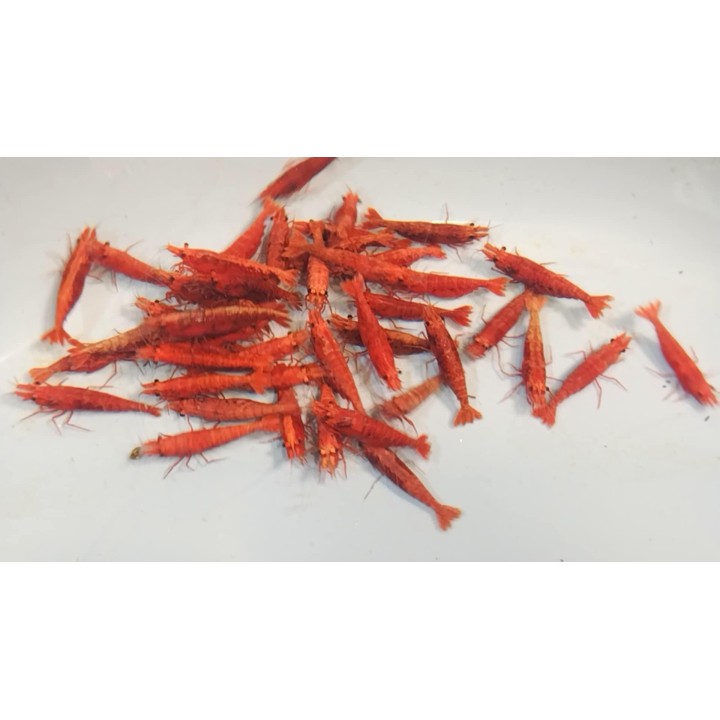
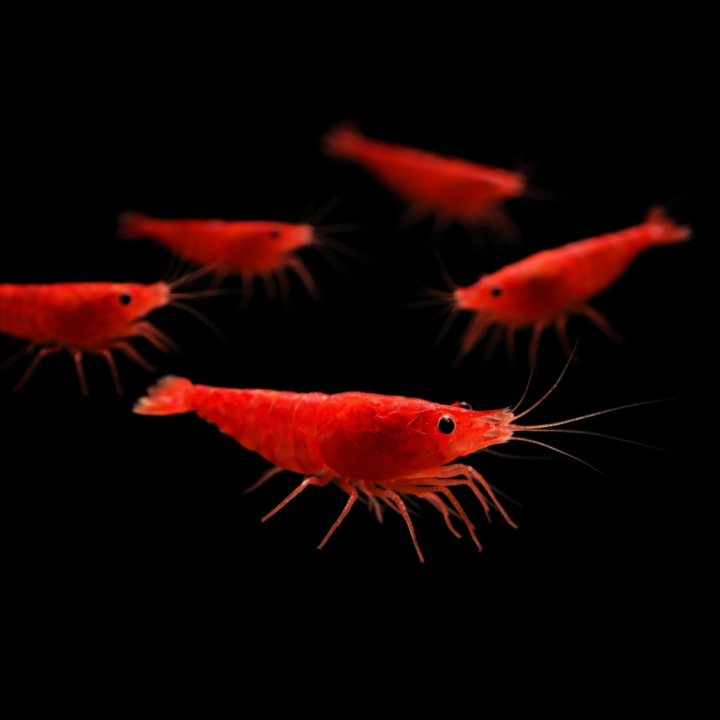
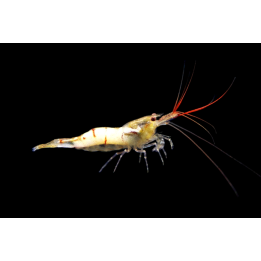
The Neocaridina davidi Sakura XL is a red variety of the popular Neocaridina, particularly appreciated for the intensity of its pigmentation.
Unlike smaller juvenile shrimp, the Sakura offered in XL size are already well-developed individuals. Their larger size allows you to immediately enjoy their colouration and makes them much easier to observe in a planted aquarium.
Red pigmentation can vary slightly depending on the individual, sex and age. Adult females generally display more intense colouration and a larger body shape than males.
With their deep red colour, Sakura XL Shrimp create a striking contrast with mosses, green plants and natural aquarium decorations.
Characteristics of Neocaridina Sakura XL
Scientific name: Neocaridina davidi
Variety: Red Sakura
Size offered: XL
Common name: Sakura Shrimp / Red Sakura Shrimp
Colouration: deep to intense red
Adult size: approximately 2.5 to 3 cm, with some females growing slightly larger
Temperature: 18 to 28°C
pH: approximately 6.5 to 8
Diet: omnivorous and detritivorous
Behaviour: peaceful and social
Difficulty: easy
Breeding: easy and entirely in freshwater
The Neocaridina Sakura is relatively adaptable, but stable water conditions and a properly cycled aquarium remain essential for successful long-term care.
What Is the Difference Between Red Cherry and Red Sakura Shrimp?
The Red Sakura belongs to the same species as the popular Red Cherry: Neocaridina davidi.
The main difference lies in selective breeding for colouration.
Sakura Shrimp are selected for generally denser and more extensive red pigmentation than standard Red Cherry Shrimp. Individuals displaying a good Sakura grade therefore tend to have fewer transparent areas on the body.
This difference is particularly noticeable in adult females, which can develop deep red colouration covering most of the body.
Why Choose Sakura Shrimp in XL Size?
The main advantage of a Neocaridina Sakura XL is that you receive an already well-developed shrimp.
The shrimp are immediately more visible in the aquarium, which can be particularly attractive in medium-sized or larger planted aquariums.
The colouration of well-developed individuals is also easier to appreciate than that of very young shrimp whose pigmentation is still developing as they grow.
A larger Sakura may also be less vulnerable than a very young shrimp to certain small, peaceful fish. However, keeping shrimp with fish always involves some risk of predation, particularly after moulting.
What Aquarium Is Suitable for Sakura XL Shrimp?
The Red Sakura XL particularly appreciates mature aquariums containing plenty of plants and natural surfaces.
Mosses, roots, stones, leaves and aquatic plants encourage the development of biofilm and micro-organisms that shrimp constantly search for.
These elements also provide essential hiding places during moulting and allow any juvenile shrimp to find shelter.
The aquarium must be properly cycled before the shrimp are introduced.
Although Neocaridina are considered relatively hardy, stable water parameters remain more important than trying to achieve extremely precise values.
What Do Neocaridina Sakura Shrimp Eat?
The Neocaridina davidi Sakura is omnivorous and detritivorous.
It spends much of its time exploring aquarium decorations and plants in search of biofilm, micro-organisms, certain microalgae and various organic particles.
Food specifically formulated for freshwater shrimp can be used to supplement the natural resources available in the aquarium.
A varied diet provided in moderation supports growth, moulting and reproduction.
Overfeeding should be avoided, as an accumulation of uneaten food can quickly reduce water quality.
An Active Red Shrimp in the Aquarium
Sakura XL Shrimp are particularly interesting to observe because of their size and activity.
They constantly explore plants, roots, stones and substrate, collecting small food particles with their legs.
They therefore naturally contribute to the consumption of biofilm, certain microalgae and organic matter.
However, they do not replace regular aquarium maintenance. Water changes, suitable filtration and good water quality remain essential.
Breeding Red Sakura Shrimp
The Neocaridina davidi Sakura breeds readily in freshwater when conditions are suitable.
After mating, the female carries her eggs beneath her abdomen and regularly fans them until they hatch.
The young hatch directly as tiny shrimp. Unlike some Caridina species, no brackish or saltwater stage is required.
An aquarium rich in mosses, plants and biofilm greatly improves the survival chances of juvenile shrimp.
It is also advisable to protect the filter intake with a fine sponge to prevent young shrimp from being drawn into the filter.
Differences Between Male and Female Sakura Shrimp
Female Sakura Shrimp are generally larger, more robust and more intensely coloured than males.
Their abdomen is broader and more rounded to accommodate the eggs.
Males generally have a slimmer body shape and may display less extensive red pigmentation.
With XL Sakura Shrimp, these differences are generally easier to observe than with very young individuals.
Sakura XL Shrimp and Fish: Compatibility
The Neocaridina Sakura is a completely peaceful shrimp and poses no danger to fish.
Its XL size may reduce the risk of predation by certain small, peaceful fish compared with very young shrimp.
However, this does not make keeping shrimp with fish completely risk-free. Many fish are still capable of preying on shrimp, and juvenile shrimp produced through breeding are particularly vulnerable.
For establishing a large Sakura colony, a dedicated shrimp aquarium remains the safest option.
In a community aquarium, dense vegetation and numerous hiding places are strongly recommended.
Can Sakura Shrimp Be Kept with Other Neocaridina?
Different varieties of Neocaridina davidi can reproduce with one another.
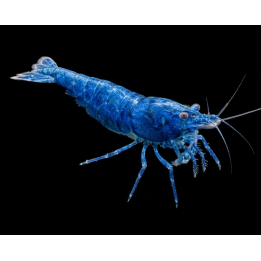
Sakura Shrimp can therefore cross with Red Cherry, Blue Velvet, Yellow, Green Jade, Orange Rili, Black and other Neocaridina varieties.
If the aim is to maintain a high-quality Red Sakura strain, it is preferable not to mix different colour varieties.
Crossbreeding can gradually alter the selected characteristics and produce offspring displaying different colours or colouration closer to the wild phenotype.
Buy Neocaridina davidi Sakura XL Shrimp Online
The Neocaridina davidi Sakura XL is an excellent choice for aquarists looking for large, well-developed red freshwater shrimp.
The XL size allows you to immediately enjoy more visible shrimp with already well-developed colouration, while retaining the characteristics that have made Neocaridina so popular: peaceful behaviour, constant activity and the ability to reproduce entirely in freshwater.
NeoTropic offers Neocaridina davidi Sakura Shrimp in XL size for sale online, selected for freshwater aquariums.
Careful acclimatisation is recommended before introducing them to their new aquarium to minimise sudden differences between the transport water and the aquarium water.
Never release aquarium shrimp into the natural environment.



Comments (0)
Your review appreciation cannot be sent
Report comment
Report sent
Your report cannot be sent