


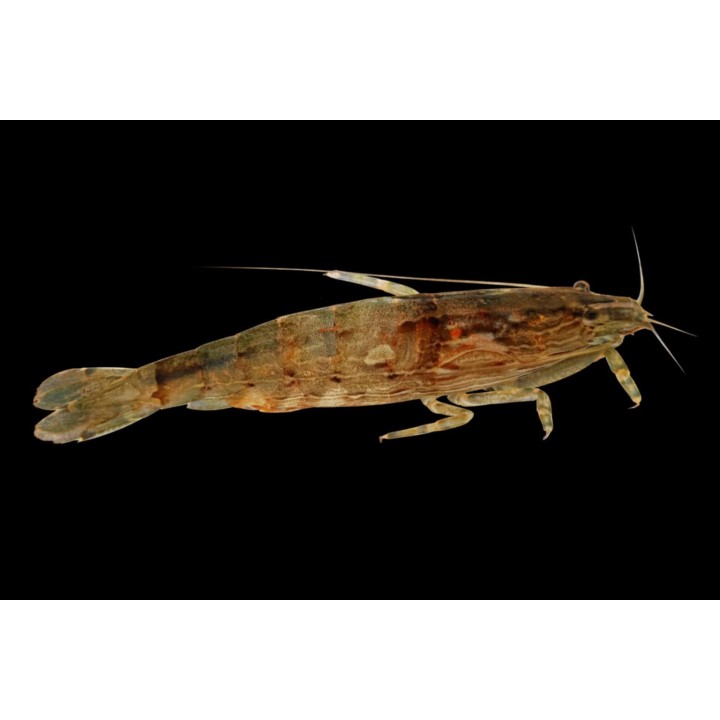
Bamboo Filter Shrimp – Atyopsis moluccensis – 4 to 6 cm images
Bamboo Filter Shrimp – Atyopsis moluccensis – 4 to 6 cm
Price:
€12.50
VAT included
The Bamboo Shrimp (Atyopsis moluccensis) is a large, peaceful and fascinating freshwater shrimp, easily recognised by its fan-shaped front appendages, which it extends into the current to capture fine food particles suspended in the water. Unusual and very different from Neocaridina or Amano Shrimp, it thrives in mature, well-oxygenated aquariums with areas of flowing water.
Atyopsis moluccensis: a Truly Different Bamboo Shrimp
The Bamboo Shrimp, scientifically known as Atyopsis moluccensis, is a freshwater shrimp native to Southeast Asia with a particularly unusual feeding method.
Unlike smaller shrimp that spend much of their time grazing on surfaces, the Bamboo Shrimp is a filter-feeding shrimp.
Its front appendages are equipped with small fan-like structures. The shrimp positions itself facing the current, opens these fans and captures fine food particles carried by the water.
This fascinating behaviour is one of the main reasons for its popularity in the aquarium hobby. Perched on a root or stone facing the filter outlet, a Bamboo Shrimp may spend long periods peacefully filtering the water.
Characteristics of the Bamboo Shrimp
Scientific name: Atyopsis moluccensis
Common names: Bamboo Shrimp / Fan Shrimp / Filter Shrimp
Family: Atyidae
Origin: Southeast Asia
Adult size: approximately 7 to 10 cm
Temperature: 22 to 28°C
pH: approximately 6.5 to 7.5
Diet: omnivorous filter feeder
Behaviour: very peaceful
Activity areas: substrate, decorations and areas with flowing water
Difficulty: intermediate
Breeding: difficult in aquariums, with larval development requiring specific conditions
The Bamboo Shrimp is relatively hardy once properly acclimatised, but its specialised feeding method must be taken into consideration before introducing it to an aquarium.
Why Does the Bamboo Shrimp Have Fans?
The fans of the Bamboo Shrimp are specialised structures that allow it to capture food particles carried by the current.
When it finds a suitable position, the shrimp faces the water flow and opens its fans. It then regularly folds them towards its mouth to consume the particles it has captured.
This natural feeding behaviour is particularly fascinating to observe.
A Bamboo Shrimp regularly positioned in the current with its fans open generally indicates that it has found a suitable feeding location.
What Aquarium Is Suitable for a Bamboo Shrimp?
Atyopsis moluccensis thrives in a mature, properly filtered and well-oxygenated aquarium.
The aquarium should contain roots, stones or other surfaces positioned in the current. These allow the shrimp to settle facing the water flow and efficiently filter suspended food particles.
Providing several feeding positions at different heights allows the shrimp to choose the location where the current is most suitable.
Plants are also beneficial and help create a natural and secure environment.
The aquarium must be properly cycled before the shrimp is introduced.
Water Flow Is Essential for Bamboo Shrimp
Good water circulation is particularly important for this species.
There is no need to turn the entire aquarium into a fast-flowing stream, but it is important to provide at least one area with sufficient water flow to carry suspended food particles towards the shrimp's fans.
A root or stone positioned close to the filter outlet often provides an excellent feeding station.
When several Bamboo Shrimp are kept together, provide several accessible positions in the current so that they do not all have to compete for the same feeding spot.
What Do Bamboo Shrimp Eat?
The Bamboo Shrimp is a filter-feeding shrimp. Its diet must therefore include particles small enough to be captured by its fans.
It naturally collects various micro-organisms and fine organic particles suspended in the water.
In the aquarium, its diet can be supplemented with very fine foods suitable for filter-feeding shrimp and other invertebrates.
Powdered or finely crushed foods can be dispersed into the current so that they are carried towards the shrimp.
It is important to find the right balance: sufficient food must be available for the shrimp without adding excessive quantities that could pollute the aquarium.
Why Is My Bamboo Shrimp Searching for Food on the Substrate?
A Bamboo Shrimp may occasionally use its fans to collect food from the substrate or aquarium decorations.
However, if it continually spends its time scraping the substrate with its fans instead of filtering the current, this may indicate that there are not enough suspended food particles available or that the areas of water flow are unsuitable.
In this situation, it is useful to check the aquarium layout and the way food is being provided.
The natural behaviour to look for is a shrimp positioned on a suitable surface, facing the current with its fans fully extended.
Do Bamboo Shrimp Eat Algae?
The Bamboo Shrimp is not an algae-eating shrimp comparable to the Amano Shrimp.
Its diet is primarily based on filtering small particles suspended in the water.
It may consume various forms of organic matter and micro-organisms, but it should not be purchased for the purpose of cleaning aquarium glass or controlling an algae outbreak.
Its main attraction is its highly distinctive filter-feeding behaviour.
Keeping Bamboo Shrimp with Fish
The Bamboo Shrimp is extremely peaceful.
Its fans are not claws designed to capture fish. It therefore does not hunt fish or other shrimp.
It can be kept with many peaceful community species that require compatible water parameters.
Large fish, aggressive species and predators capable of attacking shrimp should, however, be avoided.
Moulting is a particularly vulnerable period. After leaving its old exoskeleton, the shrimp's new shell remains very soft for a short time and the shrimp will generally seek shelter.
An aquarium containing roots, stones and plenty of hiding places is therefore essential.
Can Several Bamboo Shrimp Be Kept Together?
Bamboo Shrimp can be kept in groups when the aquarium size and layout are suitable.
They are peaceful towards one another, and observing several individuals filtering the current at the same time can be particularly interesting.
However, enough feeding positions must be provided, together with an appropriate quantity of food for the number of shrimp.
Each individual should have easy access to an area of flowing water without being forced to search for food on the substrate.
Moulting in Atyopsis moluccensis
Like all crustaceans, the Bamboo Shrimp must regularly moult in order to grow.
After moulting, it remains vulnerable while its new exoskeleton hardens and will generally seek shelter.
It is therefore important to provide hiding places and maintain stable water parameters.
An old exoskeleton found in the aquarium can easily be mistaken for a dead shrimp. An empty moult is generally translucent and has a characteristic opening through which the shrimp has emerged.
It is not always necessary to remove the empty exoskeleton immediately, as shrimp and other aquarium inhabitants may recover some of the minerals it contains.
Breeding Bamboo Shrimp
Breeding Atyopsis moluccensis is difficult in aquariums.
Females may carry numerous eggs beneath their abdomen, but the young pass through a larval stage that differs from the direct development seen in Neocaridina.
Larval development requires specific conditions linked to the species' natural life cycle, including a stage in water with different salinity before the young return to freshwater.
Completing the entire breeding cycle therefore requires a specialised setup and does not generally occur spontaneously in a standard freshwater aquarium.
A Large and Spectacular Yet Completely Peaceful Shrimp
Despite being considerably larger than a Neocaridina, the Bamboo Shrimp is a peaceful animal.
It does not display the predatory behaviour of a crayfish and does not attempt to capture fish.
Its main appeal comes from its size, appearance and, above all, its highly specialised feeding behaviour.
Watching an Atyopsis moluccensis perched on a root with its fans extended into the current is one of the most distinctive and fascinating behaviours that can be observed in a freshwater aquarium shrimp.
Buy Bamboo Shrimp – Atyopsis moluccensis Online
The Bamboo Shrimp is an excellent choice for aquarists looking for a large and unusual freshwater shrimp that is very different from the species commonly kept in aquariums.
Its filter-feeding behaviour, size and peaceful temperament make it a particularly interesting inhabitant for a mature and suitably arranged community aquarium.
NeoTropic offers Atyopsis moluccensis Bamboo Shrimp for sale online.
Careful acclimatisation is recommended on arrival to minimise sudden differences between the transport water and the aquarium water.
Never release aquarium shrimp into the natural environment.
-
In stock21 Items
4 other products in the same category
Clients also bought
CPO Dwarf Crayfish – Cambarellus patzcuarensis Orange – 2 cm
€7.50
Rated out of 5 stars based on
review(s)

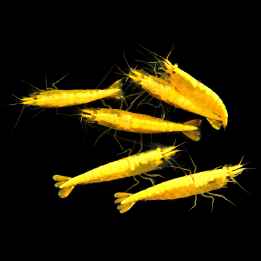
Yellow Fire Shrimp Grade A – Neocaridina davidi – 1.5 to 2 cm
€4.99
Rated out of 5 stars based on
review(s)
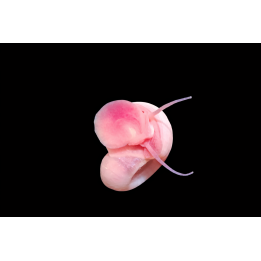
Red Ramshorn Snail – Freshwater Aquarium Snail – 1 to 2 cm
€2.50
Rated out of 5 stars based on
review(s)
Comments (0)
Your review appreciation cannot be sent
Report comment
Report sent
Your report cannot be sent