


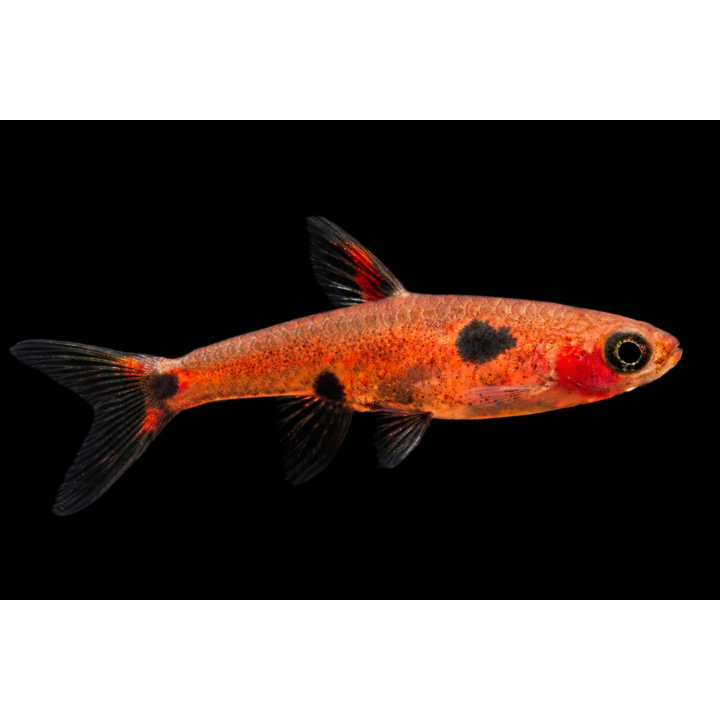
Boraras maculatus – Dwarf Rasbora – 1 to 2 cm images
Boraras maculatus – Dwarf Rasbora – 1 to 2 cm
Price:
€3.75
VAT included
Boraras maculatus, commonly known as the Dwarf Rasbora, is a tiny fish native to Southeast Asia, appreciated for its reddish colouration, peaceful behaviour and extremely small size.
Reaching only around 2 to 2.5 cm as an adult, it is particularly suitable for small, mature planted aquariums and can be kept with freshwater shrimp under suitable conditions.
A sociable, shoaling species, it should be kept in a group of at least 8 to 10 individuals. The specimens offered are approximately 1 to 2 cm.
Recommended parameters: temperature 20 to 28 °C – acidic pH, ideally 4 to 6.5 – soft to very soft water.
Boraras maculatus – Dwarf Rasbora
Boraras maculatus, commonly known as the Dwarf Rasbora, is one of the smallest fish available in the aquarium hobby.
Native to Southeast Asia, it is appreciated for its tiny size, reddish colouration with distinctive dark markings and peaceful behaviour.
The specimens offered here are approximately 1 to 2 cm.
Adult Size of Boraras maculatus
Boraras maculatus remains extremely small, generally reaching around 2 to 2.5 cm as an adult.
Its tiny size makes it particularly suitable for smaller planted aquariums, provided its water requirements and social needs are respected.
Colouration of Boraras maculatus
The body can range from orange to reddish in colour and displays several characteristic dark markings.
Colour intensity can vary between individuals and according to their conditions. Mature dominant males can develop particularly intense colouration.
A Shoaling Fish to Keep in a Group
Boraras maculatus is a sociable, shoaling fish and should not be kept alone.
A group of at least 8 to 10 individuals is recommended. Keeping a sufficiently large group helps the fish feel more secure and encourages them to display their natural behaviour.
What Size Aquarium Does Boraras maculatus Need?
Despite its extremely small size, Boraras maculatus benefits from sufficient space to move and interact as a group.
An aquarium with a footprint of approximately 45 × 30 cm provides a good basis for keeping a group.
A mature, densely planted aquarium is particularly suitable. Plants, roots, leaf litter and shaded areas can help recreate an environment similar to its natural habitat.
Water movement should not be excessively strong.
Water Parameters
Temperature: 20 to 28 °C
pH: 4 to 6.5
Hardness: approximately 1 to 5 °dGH
Nitrite: 0 mg/L
Boraras maculatus is naturally associated with soft, acidic water. Alkaline and highly mineralised water is therefore not suited to its natural requirements.
Nitrite should remain undetectable and the species benefits from stable water conditions. It is preferable to introduce these fish into a mature aquarium rather than a newly established tank.
Feeding Boraras maculatus
In its natural habitat, Boraras maculatus is a micropredator, feeding on tiny insects, worms, crustaceans and other very small organisms.
In the aquarium, it can accept appropriately sized micro-pellets and finely crushed flakes.
Its diet can be supplemented with small foods such as Artemia nauplii, small Daphnia and other suitably sized live or frozen foods.
A varied diet contributes to good overall condition and helps the fish develop more intense colouration.
Keeping Boraras maculatus with Shrimp
Thanks to its extremely small size and peaceful temperament, Boraras maculatus can be kept in a planted aquarium with freshwater shrimp such as Neocaridina and some Caridina, provided their water requirements are compatible.
However, it is important to remember that this species is a micropredator. Adult shrimp are generally too large to be considered prey, but opportunistic predation on very young shrimp cannot be completely ruled out.
Dense vegetation and mosses provide additional hiding places for juvenile shrimp.
Behaviour and Compatibility
Boraras maculatus is a very peaceful fish, but its tiny size also makes it relatively timid.
It is best kept with other small, peaceful fish. Much larger or particularly active species may intimidate it or potentially regard it as prey.
Breeding Boraras maculatus
Boraras maculatus is an egg-laying, egg-scattering fish.
Under suitable conditions, small numbers of eggs may regularly be deposited among fine-leaved plants and mosses.
The adults provide no parental care and may eat the eggs or fry.
In a mature and densely planted aquarium, a small number of young may occasionally survive without specific intervention.
Origin of Boraras maculatus
Boraras maculatus is native to Southeast Asia. Its natural range includes the Malay Peninsula, southern Thailand, Sumatra and parts of Indonesia.
In the wild, it inhabits forest streams and environments associated with peat swamps, often characterised by very soft, acidic, dark water rich in decomposing plant material.
Lifespan
Under suitable aquarium conditions, Boraras maculatus can live for approximately 3 to 5 years.
Conservation Status
Boraras maculatus is currently classified as LC – Least Concern on the IUCN Red List.
Its natural habitats can nevertheless be locally affected by the loss and alteration of forests and wetlands.
Never Release Aquarium Fish into the Wild
Aquarium fish must never be released into a river, pond, lake or any other natural environment, in order to protect natural ecosystems and wildlife.
Key Facts About Boraras maculatus
- scientific name: Boraras maculatus;
- common name: Dwarf Rasbora;
- size offered: 1 to 2 cm;
- adult size: approximately 2 to 2.5 cm;
- origin: Southeast Asia;
- very peaceful, shoaling fish;
- group of at least 8 to 10 individuals recommended;
- suitable for small, mature planted aquariums;
- can be kept with freshwater shrimp under suitable conditions;
- temperature: 20 to 28 °C;
- soft, acidic water;
- micropredator;
- egg-scattering reproduction;
- lifespan: approximately 3 to 5 years;
- IUCN status: LC – Least Concern.
-
In stock7 Items
4 other products in the same category
Sakura Rili Shrimp – Neocaridina davidi – Red and Transparent Aquarium Shrimp – 1.5 to 2 cm
€4.99
Rated out of 5 stars based on
review(s)
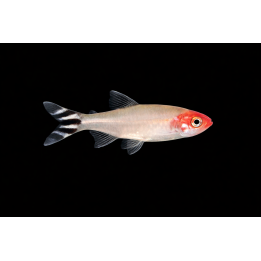
Rummy-Nose Tetra – Hemigrammus rhodostomus – 2.5 to 3 cm
€3.25
Rated out of 5 stars based on
review(s)
Viewed products

Clients also bought
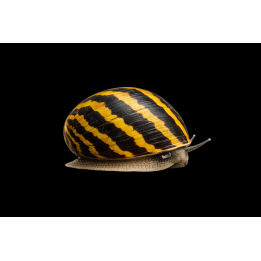
Nerite Snail – Neritina sp. – Algae-Eating Snail – 2 to 3 cm
€3.25
Rated out of 5 stars based on
review(s)
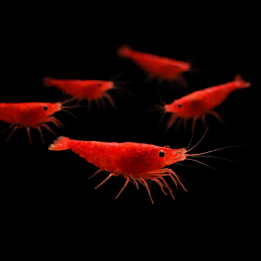
Crevette Sakura Rouge – Neocaridina davidi Red Sakura – 1,5 à 2 cm
€4.95
Rated out of 5 stars based on
review(s)

Comments (0)
Your review appreciation cannot be sent
Report comment
Report sent
Your report cannot be sent