Neritina sp. Characteristics
Scientific name: Neritina sp.
Common names: Nerite Snail / Algae-Eating Snail
Family: Neritidae
Origin: Asia / Indo-Pacific region depending on the species
Water type: freshwater
Adult size: approximately 2 to 3 cm
Behaviour: peaceful
Living area: aquarium glass, stones, roots, substrate and other surfaces
Diet: mainly algae, biofilm and micro-organisms
Difficulty: easy to intermediate in a mature aquarium
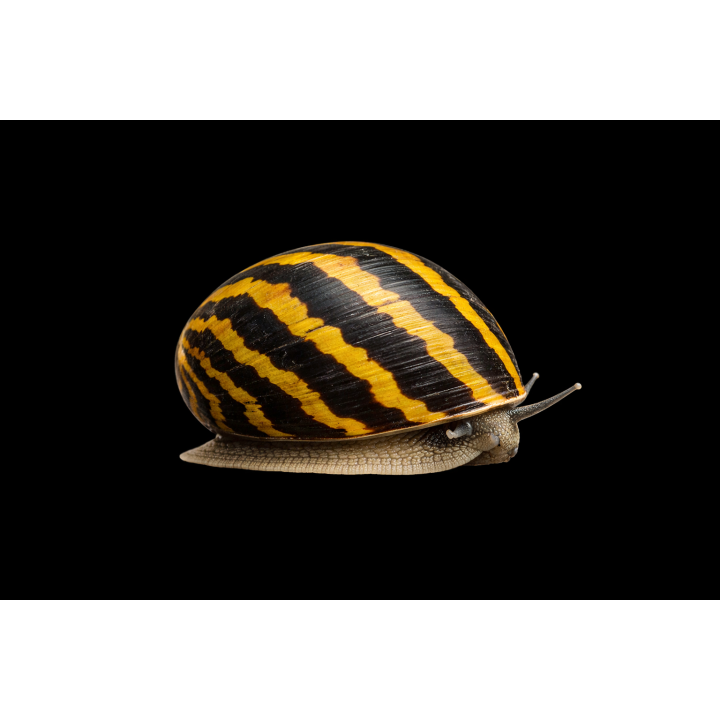
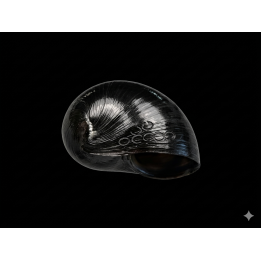
Appearance: the shell generally displays brown to mustard-yellow tones, with patterns and stripes that can vary from one individual to another.
Identification: the animals sold under the name Neritina sp. have not been identified with sufficient certainty at species level. Their colouration and patterns may therefore show natural variation.
Lifespan in captivity: generally several years under suitable conditions. Exact lifespan may vary depending on the species, the age of the animal when purchased, water quality, diet and available mineral content.
IUCN status: cannot be determined precisely under the name Neritina sp., as the exact species has not been identified.
CITES / international protection: no precise status can be assigned on the basis of the commercial name Neritina sp. alone. Identification at species level would be required to determine its exact regulatory status.
Water Parameters
Neritina snails appreciate clean, stable and sufficiently mineralised water to help maintain a healthy shell.
Recommended temperature: approximately 22 to 28°C
Recommended pH: approximately 7 to 8.5
Water: moderately hard to hard water is preferable
Nitrite: 0 mg/L
Filtration: efficient, without excessive accumulation of waste
Aquarium: mature, with surfaces naturally colonised by algae and biofilm
Excessively acidic water or water that is too low in minerals can gradually weaken or erode the shell.
Stable water parameters are particularly important for the long-term care of these snails.
What Aquarium Is Suitable for Neritina sp.?
Thanks to its small size, Neritina sp. can be kept in a variety of aquarium sizes. However, the amount of naturally available food is more important than aquarium volume alone.
A mature aquarium containing stones, roots and other surfaces colonised by biofilm and certain types of algae provides a particularly suitable environment.
Avoid introducing several algae-eating snails into a new aquarium or one completely lacking algae and biofilm, as natural food resources may be insufficient.
An Algae-Eating Snail
Neritina sp. is particularly appreciated for its constant grazing activity on the different surfaces of the aquarium.
It can consume various types of soft algae as well as biofilm growing on aquarium glass, stones, roots, decorations and some plant surfaces.
Its grazing activity can therefore help control certain algae deposits in a mature aquarium.
However, it should not be considered a solution to every type of algae. No snail replaces regular aquarium maintenance or the need to identify the cause of excessive algae growth.
Does Neritina sp. Eat Plants?
Neritina sp. does not generally damage healthy aquatic plants.
When moving across plant leaves, it mainly grazes on algae, biofilm and micro-organisms growing on their surfaces.
It is therefore particularly well suited to planted aquariums.
Feeding Neritina sp.
In a mature aquarium, much of its diet comes naturally from algae and biofilm growing on the different surfaces.
When these natural resources become insufficient, supplementary foods suitable for snails and other freshwater invertebrates can be offered.
Vegetable-based foods, spirulina-based foods or foods specifically formulated for freshwater invertebrates can be used to supplement its diet.
It is important to monitor available food resources when several snails are kept together. An extremely clean aquarium may not provide enough algae and biofilm to feed every individual adequately.
The Importance of Minerals for the Shell
The shell provides essential protection for the snail.
Excessively soft or acidic water can gradually contribute to shell deterioration or erosion.
Sufficiently mineralised water and a suitable diet help maintain the shell in good condition.
Behaviour and Compatibility
Neritina sp. is a peaceful snail that spends much of its time methodically exploring the different surfaces of the aquarium.
It can generally be kept with many peaceful community fish and freshwater shrimp when their water requirements are compatible.
Fish known to attack or eat molluscs should, however, be avoided.
Compatibility with Shrimp
Nerite Snails are particularly interesting additions to aquariums containing freshwater shrimp.
Snails and shrimp can graze simultaneously on the same biofilm-rich surfaces without displaying aggressive behaviour towards one another.
Compatibility with Neocaridina and many other freshwater shrimp is generally very good when their water requirements are compatible.
Beware of Escapes
Nerite Snails are capable of temporarily leaving the water and can climb aquarium glass very effectively.
A securely covered aquarium is therefore strongly recommended.
Particular attention should be paid to openings around cables and filter pipes to reduce the risk of a snail leaving the aquarium.
Breeding Neritina sp.
Females of many Neritidae species can deposit small whitish egg capsules on stones, roots, aquarium glass and other hard surfaces.
These capsules may therefore appear even in an entirely freshwater aquarium.
In many Neritidae kept in the aquarium hobby, however, complete development involves a larval phase associated with brackish or marine conditions.
Complete reproduction is therefore generally not observed in a standard freshwater aquarium.
As these animals are identified only as Neritina sp., it is preferable not to attribute a more specific reproductive cycle without reliable species identification.
Why Choose Neritina sp.?
Neritina sp. is particularly appreciated for:
- its decorative brown and mustard-yellow shell;
- its patterns, which vary between individuals;
- its small size;
- its peaceful behaviour;
- its constant activity on aquarium glass, stones and roots;
- its natural grazing on algae and biofilm;
- its compatibility with planted aquariums;
- its good compatibility with many freshwater shrimp.
It is therefore both an attractive and interesting snail to observe in a mature aquarium.
Frequently Asked Questions About Neritina sp.
Why Is the Snail Sold as Neritina sp.?
The abbreviation “sp.” means that the animal belongs to the stated genus, but its precise identification at species level has not been established with sufficient certainty.
It is therefore preferable to retain the name Neritina sp. rather than assign a specific species without reliable identification.
How Big Does Neritina sp. Grow?
The specimens offered generally reach approximately 2 to 3 cm, with possible variation depending on the exact species and individual.
Does Neritina sp. Eat Algae?
Yes. It naturally grazes on various types of algae and especially biofilm growing on aquarium glass, stones, roots and other surfaces.
Is It an Aquarium Cleaner?
Its grazing activity can help control certain algae deposits, but it does not replace regular aquarium maintenance.
Can It Live with Shrimp?
Yes. Compatibility with many freshwater shrimp is generally very good when their water requirements are compatible.
Why Does My Nerite Snail Leave the Water?
Nerite Snails are capable of exploring areas above the waterline. A securely covered aquarium is therefore recommended to prevent individuals from leaving the tank.
Why Is My Nerite Snail's Shell Deteriorating?
Water that is too acidic or insufficiently mineralised can contribute to shell erosion. The pH and mineral content of the water should therefore be checked.
Do I Need to Feed a Nerite Snail?
Yes, when natural food resources become insufficient. A very clean aquarium or one containing several snails may not produce enough algae and biofilm to feed every individual adequately.
Never Release an Aquarium Snail into the Natural Environment
Neritina sp. must never be released into a river, pond, lake or any other natural environment.
This applies to all animals kept in aquariums, regardless of their origin.



Comments (0)
Your review appreciation cannot be sent
Report comment
Report sent
Your report cannot be sent