Characteristics
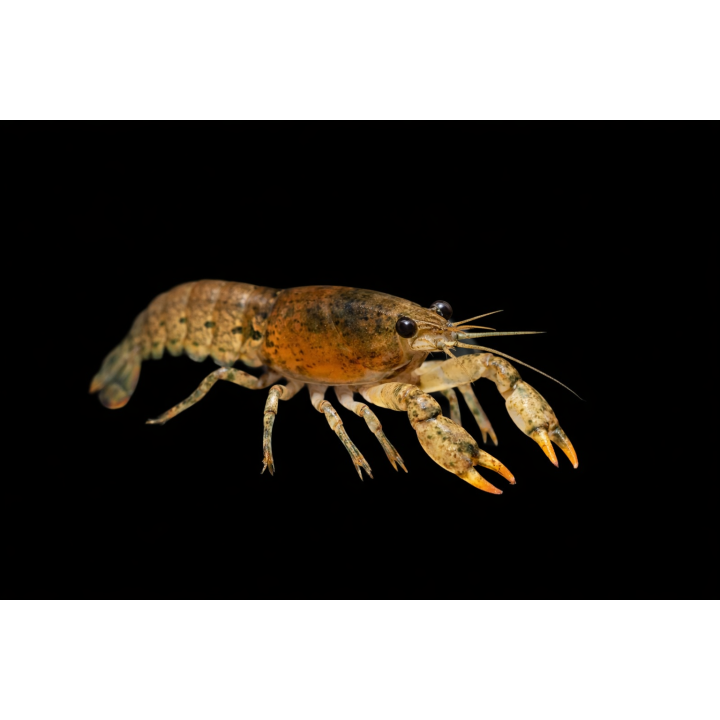
Scientific name: Cambarellus texanus
Common names: Texas Dwarf Crayfish / Brazos Dwarf Crayfish
Family: Cambaridae
Origin: Texas, United States
Natural habitat: shallow freshwater, calm and vegetated areas
Size: small dwarf crayfish
Living area: mainly the bottom of the aquarium
Diet: omnivorous / detritivorous
Care: properly cycled aquarium with plenty of hiding places
Breeding: possible in freshwater
Special feature: relatively rare in the aquarium trade
Recommended water parameters:
- Temperature: approximately 18 to 28°C
- pH: approximately 6.5 to 8
- GH: approximately 5 to 15
- Properly cycled and biologically mature aquarium
- Nitrite: 0 mg/L
- Avoid copper and other heavy metals
Additional Information
Cambarellus texanus: a Dwarf Crayfish Native to Texas
Cambarellus texanus is a North American dwarf crayfish belonging to the family Cambaridae. Scientifically described in 1973, it naturally occurs in Texas, where its distribution is relatively limited. It is particularly known from drainage basins between the Lavaca and Brazos rivers.
It is also known as the Brazos Dwarf Crayfish.
Its small size and interesting behaviour make it particularly appealing to aquarists looking to discover less commonly kept dwarf crayfish than the well-known CPO.
Natural Habitat of Cambarellus texanus
In its natural habitat, Cambarellus texanus can be found in shallow, calm waters containing aquatic vegetation. It may also occur in ditches containing standing water and emergent vegetation.
The species has an interesting adaptation: when some areas dry out, it is capable of burrowing to find shelter during dry periods.
These characteristics also provide useful guidance for aquarium care. A structured environment rich in vegetation and hiding places is preferable to a completely open aquarium.
What Aquarium Is Suitable for Cambarellus texanus?
To keep this dwarf crayfish successfully, choose a properly cycled aquarium containing plenty of hiding places.
Roots, stones, leaves, mosses, aquatic plants and small cavities help structure the environment and provide secure shelters.
Hiding places become particularly important during moulting. Like all crustaceans, the crayfish must regularly replace its exoskeleton in order to grow. After moulting, its new exoskeleton remains temporarily soft and the animal is particularly vulnerable.
When several crayfish are kept together, it is therefore preferable to provide numerous shelters so that each individual can retreat when necessary.
What Does Cambarellus texanus Eat?
Like other small crayfish of the genus Cambarellus, Cambarellus texanus is omnivorous and detritivorous and can be offered a varied diet in the aquarium.
Foods formulated for crayfish and other freshwater crustaceans, supplemented by the different natural resources available in a mature aquarium, provide a varied diet.
Leaves and other natural materials are also beneficial because they create surfaces on which biofilm and micro-organisms can develop.
However, Cambarellus texanus should not be considered simply as an aquarium “cleaner”. A suitable and regular diet remains essential.
Keeping Cambarellus texanus with Fish and Shrimp
Despite its small size, Cambarellus texanus is still a crayfish equipped with claws. Compatibility with other aquarium inhabitants should therefore always be considered carefully.
Aggressive fish or species large enough to regard the crayfish as prey should be avoided. Newly moulted crayfish are particularly vulnerable.
Conversely, keeping them with small freshwater shrimp cannot be considered completely risk-free. A shrimp or juvenile that comes within reach of a crayfish may potentially be captured.
An aquarium containing dense vegetation and numerous hiding places can help reduce encounters and conflicts, although it cannot eliminate the risk completely.
Breeding Cambarellus texanus
Cambarellus texanus can reproduce in freshwater aquariums. After mating, the female carries her eggs beneath the abdomen until the young develop.
To improve juvenile survival, provide numerous small hiding places. Mosses, leaves and fine structures allow the young crayfish to retreat and avoid larger individuals.
Protecting the filter intake is also recommended in an aquarium intended for breeding.
A Dwarf Crayfish Still Uncommon in the Aquarium Hobby
Cambarellus texanus is particularly interesting for enthusiasts looking to keep a dwarf crayfish different from the species commonly available in the aquarium trade.
The species has been reported as very rare in the aquarium trade, with only limited records from the European aquarium market.
Its natural distribution is restricted to Texas. NatureServe has assessed the species as G3G4, placing it between vulnerable and apparently secure at the global level, while also indicating that the assessment requires review.
Its restricted natural distribution and relative rarity in the aquarium hobby make Cambarellus texanus a particularly interesting species for enthusiasts of dwarf crayfish and the genus Cambarellus.
Never release Cambarellus texanus or any aquarium crayfish into the natural environment.




Comments (0)
Your review appreciation cannot be sent
Report comment
Report sent
Your report cannot be sent