


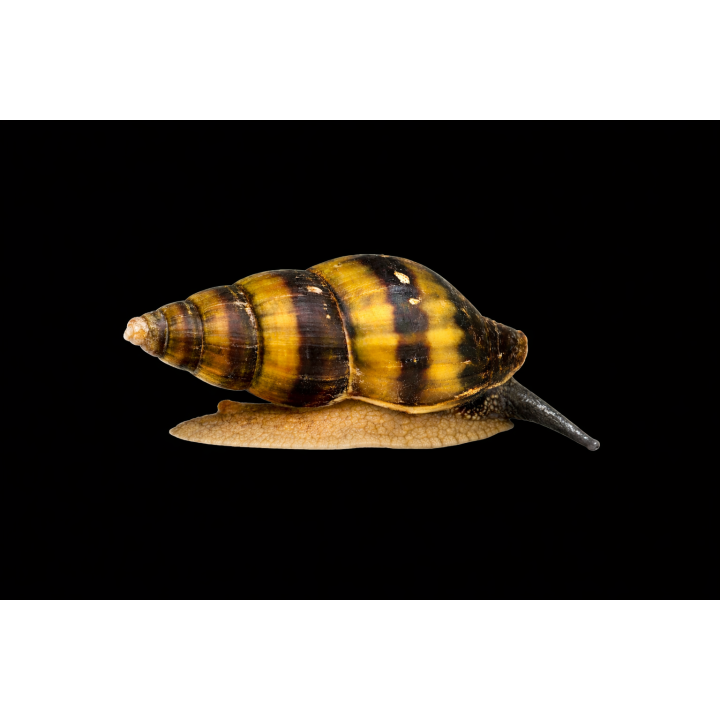
Assassin Snail – Anentome helena images
Assassin Snail – Anentome helena
Price:
€3.10
VAT included
Characteristics
Scientific name: Anentome helena
Common names: Assassin Snail / Helena Snail
Origin: Southeast Asia
Adult size: approximately 2 to 3 cm
Recommended temperature: approximately 22 to 28°C
pH: approximately 6.5 to 8
Living area: bottom of the aquarium and substrate
Diet: carnivorous and predator of other snails
Care: relatively easy in a properly cycled aquarium
Breeding: possible in freshwater
Lifespan: several years under suitable conditions
Special feature: predatory snail commonly kept to help control certain aquarium snail populations
Additional Information
Anentome helena: the Assassin Snail
Anentome helena, commonly known as the Assassin Snail or Helena Snail, is a freshwater snail particularly well known among aquarists for its unusual feeding behaviour: it is capable of hunting and eating other snails.
Its conical shell usually displays alternating yellow and dark brown bands, giving it a distinctive and easily recognisable appearance. With an adult size generally around 2 to 3 cm, it remains relatively small and can be kept in many freshwater aquariums.
Native to Southeast Asia, Anentome helena naturally inhabits various freshwater environments and often spends part of its time buried in the substrate.
A Snail-Eating Snail for the Aquarium
Anentome helena is a predator of other snails. This characteristic explains its popularity in aquariums where certain snail species have multiplied excessively.
It can prey on various small gastropods found in the aquarium. However, it should not be considered an automatic solution to a snail infestation. Excessive snail populations are often encouraged by an abundance of available food in the aquarium.
Keeping Anentome helena therefore does not remove the need to identify the cause of excessive snail reproduction and, where necessary, adjust the amount of food provided.
What Does Anentome helena Eat?
In the aquarium, the Assassin Snail actively searches for prey and can consume other snails.
When prey snails become scarce, its diet should be supplemented. It can accept various protein-rich foods as well as some foods provided for fish and crustaceans.
It is therefore not primarily an algae-eating snail. Its diet is very different from that of many aquarium snails commonly kept to graze on surfaces.
What Aquarium Is Suitable for Anentome helena?
Anentome helena appreciates a properly cycled and biologically stable aquarium. Sand or a relatively fine substrate is suitable, as this snail regularly likes to bury itself, sometimes almost completely.
Plants, roots, stones and leaves help create a natural environment and provide plenty of surfaces to explore.
A temperature of approximately 22 to 28°C and a pH of around 6.5 to 8 are suitable for its care. As with other snails, excessively acidic water or water that is too low in minerals can weaken the shell.
Nitrite should remain at 0 mg/L, and the snail should only be introduced into a properly cycled aquarium.
Particular care should also be taken with treatments containing copper, as copper can be toxic to snails and many other freshwater invertebrates.
Anentome helena and Other Snails: Compatibility
It is important to remember that Anentome helena is a predatory snail. It is therefore not recommended if the aim is to keep a population of other small snails completely safe in the same aquarium.
Predation depends on factors including the size of the animals, the species present and the availability of other food sources. Keeping Assassin Snails with other snails that you wish to preserve should therefore be considered carefully.
Anentome helena and Shrimp
Anentome helena is primarily known for preying on gastropods. In a shrimp aquarium, however, compatibility between different invertebrates should never be considered completely risk-free.
A mature, properly fed aquarium with plenty of hiding places is preferable when several species of freshwater invertebrates are kept together.
Breeding Assassin Snails
Anentome helena can reproduce entirely in freshwater. Unlike many snails capable of multiplying very rapidly, its reproduction is generally much more gradual.
Assassin Snails are not hermaphrodites: there are separate males and females, which cannot easily be distinguished externally by aquarists.
After mating, the female lays individual eggs on hard surfaces such as stones, wood or other structures within the aquarium. Development is relatively slow compared with many snail species that can rapidly become abundant in aquariums.
This slower rate of reproduction generally makes the population easier to keep under control.
An Unusual and Fascinating Freshwater Snail
With its distinctive conical shell, predatory behaviour and habit of burrowing into the substrate, Anentome helena is a particularly interesting freshwater gastropod to observe.
It can help control certain snail populations, but its introduction should be carefully considered: once present in the aquarium, it may also prey on snails that the aquarist wishes to keep.
As with all aquatic animals kept in captivity, never release Anentome helena into the natural environment.
-
In stock35 Items
4 other products in the same category
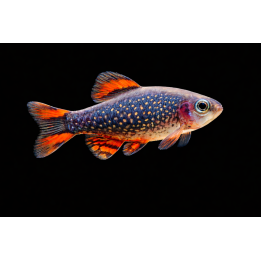
Galaxy Rasbora – Celestichthys margaritatus – 1 to 2 cm
€7.25
Rated out of 5 stars based on
review(s)
Clients also bought
Bamboo Filter Shrimp – Atyopsis moluccensis – 4 to 6 cm
€12.50
Rated out of 5 stars based on
review(s)
Comments (0)
Your review appreciation cannot be sent
Report comment
Report sent
Your report cannot be sent