Neritina pulligera Characteristics
Scientific name: Neritina pulligera
Common names: Black Military Helmet Snail / Helmet Snail
Family: Neritidae
Origin: Indo-Pacific region and Asia depending on the population
Water type: freshwater
Adult size: approximately 3 to 4 cm
Recommended temperature: approximately 22 to 28°C
pH: approximately 7 to 8.5
Behaviour: peaceful
Living area: aquarium glass, stones, roots, substrate and other surfaces
Diet: mainly algae, biofilm and micro-organisms
Care: mature, stable and sufficiently mineralised aquarium
Breeding: no uncontrolled reproduction in a standard freshwater aquarium
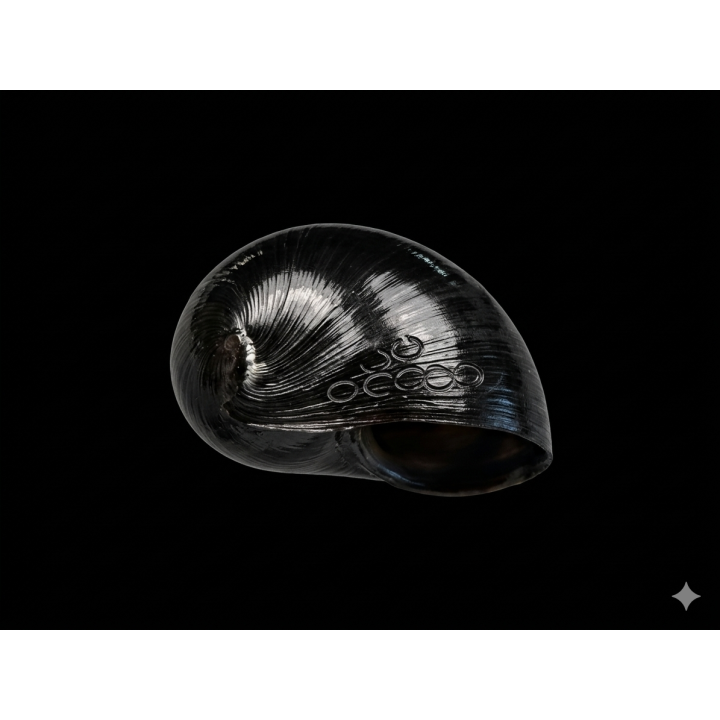
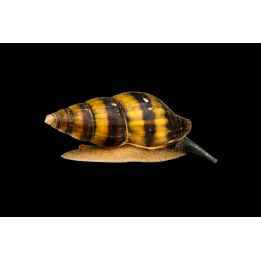
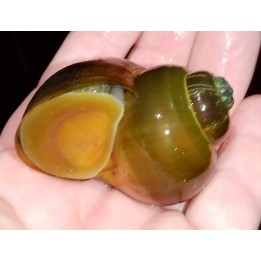
Special feature: dark, rounded and thick shell resembling the shape of a helmet
Additional Information
Neritina pulligera: the Algae-Eating Helmet Snail
Neritina pulligera, commonly known as the Black Military Helmet Snail or Helmet Snail, is a particularly interesting snail for freshwater aquariums. It is easily recognised by its dark, thick and rounded shell, whose distinctive shape gives this species its common name.
In addition to its unusual appearance, Neritina pulligera is appreciated for its constant grazing activity on the different surfaces of the aquarium. It spends much of its time exploring aquarium glass, stones, roots and decorations in search of algae and biofilm.
An Excellent Algae-Eating Snail
Neritina pulligera mainly feeds by grazing on algae and biofilm. In a mature aquarium, it continuously explores surfaces in search of food.
It can help control various types of algae growing on aquarium glass, stones, roots and other surfaces.
However, not all types of algae are consumed with the same efficiency. Keeping this snail therefore does not replace regular aquarium maintenance or the need to identify the cause of excessive algae growth.
It should not simply be considered an “aquarium cleaner”, but as an animal in its own right whose nutritional requirements must be met.
What Aquarium Is Suitable for Neritina pulligera?
Neritina pulligera particularly appreciates mature aquariums where biofilm and naturally occurring algae are already present.
Stones, roots, aquarium glass and other decorative elements provide plenty of surfaces for the snail to explore in search of food.
A temperature of approximately 22 to 28°C and a pH of around 7 to 8.5 are suitable for its care.
Sufficiently mineralised water is preferable to help maintain a healthy shell. Excessively acidic water or water that is too low in minerals can gradually cause shell deterioration or erosion.
The aquarium must be properly cycled and nitrite should remain at 0 mg/L.
What Does Neritina pulligera Eat?
In a mature aquarium, algae and biofilm form an important part of the diet of Neritina pulligera.
When these natural food sources become insufficient, supplementary foods suitable for snails and other freshwater invertebrates can be offered.
It is particularly important to monitor food availability when several algae-eating snails are kept in the same aquarium. An extremely clean aquarium completely lacking algae is not necessarily an ideal environment for these animals.
Does Neritina pulligera Eat Plants?
Neritina pulligera does not generally damage healthy aquatic plants.
When moving across plant leaves, it mainly grazes on algae, biofilm and micro-organisms growing on their surfaces.
It is therefore particularly well suited to planted aquariums.
Compatibility with Fish and Shrimp
Neritina pulligera is a peaceful snail. It does not display aggressive behaviour towards fish or shrimp.
It can generally be kept with peaceful community fish and freshwater shrimp when their water requirements are compatible.
However, fish that specialise in eating molluscs or species capable of attacking and damaging snails should be avoided.
Warning: Neritina pulligera Can Leave the Aquarium
Like other members of the Neritidae family, Neritina pulligera is capable of temporarily leaving the water and can climb aquarium glass very effectively.
It may reach the upper part of the aquarium and continue exploring outside the tank.
A securely covered aquarium is therefore strongly recommended. Particular attention should be paid to openings around electrical cables and filter pipes.
Breeding Neritina pulligera
The reproductive cycle of Nerite Snails differs from that of many freshwater snails capable of multiplying rapidly.
Egg capsules may be deposited on various hard surfaces within the aquarium.
However, in Nerite Snails with this type of reproductive cycle, larval development requires conditions different from those found in an entirely freshwater aquarium, generally including a brackish or marine phase.
Neritina pulligera therefore does not normally produce an uncontrolled population in a standard freshwater aquarium.
An Unusual Snail for Freshwater Aquariums
With its dark helmet-shaped shell, peaceful behaviour and constant grazing activity, Neritina pulligera is both attractive and particularly interesting to observe.
Its grazing activity can help control certain types of algae in a mature aquarium, without the risk of uncontrolled reproduction in an entirely freshwater aquarium.
As with all aquatic animals kept in captivity, never release Neritina pulligera into the natural environment.



Comments (0)
Your review appreciation cannot be sent
Report comment
Report sent
Your report cannot be sent