

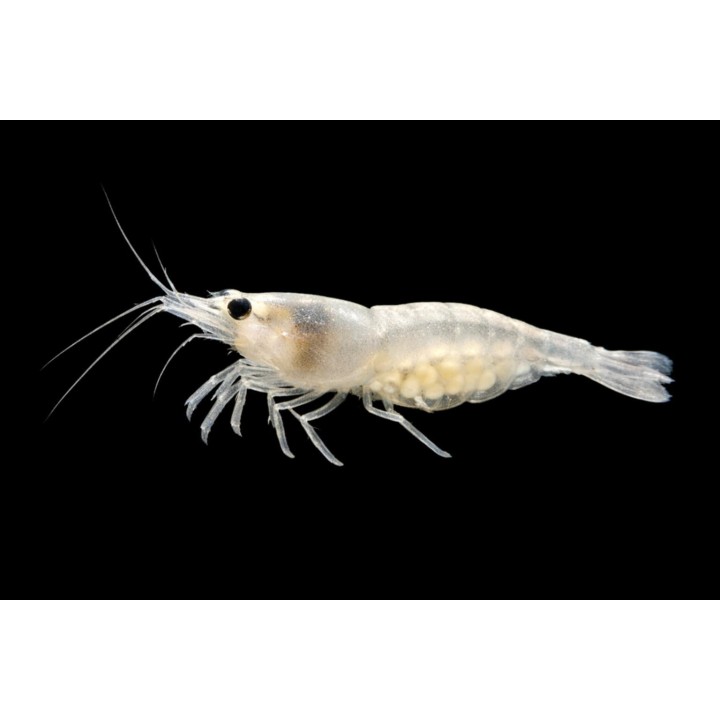
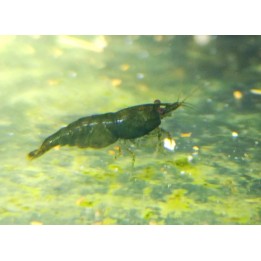
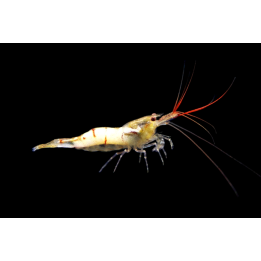
White Pearl Shrimp – Neocaridina davidi – 1.5 cm images
White Pearl Shrimp – Neocaridina davidi – 1.5 cm
Price:
€4.95
VAT included
The White Pearl Shrimp (Neocaridina davidi) is an elegant freshwater shrimp characterised by its pearly white to translucent colouration, which contrasts particularly well with plants and dark substrates. Peaceful, active and easy to observe, it thrives in mature aquariums rich in mosses, vegetation and biofilm.
Neocaridina White Pearl: an Elegant White Freshwater Shrimp
The White Pearl is a freshwater dwarf shrimp particularly appreciated for its delicate and luminous appearance. Its body colouration ranges from translucent white to slightly milky or pearly white depending on the individual.
Unlike varieties with very intense colours, its appeal lies in this light and subtle appearance. Against a dark substrate and surrounded by green vegetation, the White Pearl Shrimp creates a particularly attractive contrast.
Adult females are generally larger and more robust than males. Their colouration may also be more pronounced.
Characteristics of the White Pearl Shrimp
Name: Neocaridina White Pearl
Variety: White Pearl
Common name: White Pearl Shrimp / White Shrimp
Colouration: white, pearly to translucent
Adult size: approximately 2.5 to 3 cm
Temperature: 18 to 28°C
pH: approximately 6.5 to 8
Diet: omnivorous and detritivorous
Behaviour: peaceful and social
Difficulty: easy
Breeding: possible entirely in freshwater
Stable water conditions and a properly cycled aquarium are essential. As with all dwarf shrimp, sudden changes in temperature or water parameters should be avoided.
What Aquarium Is Suitable for White Pearl Shrimp?
The White Pearl particularly appreciates planted aquariums containing plenty of natural surfaces.
Mosses, plants, roots, stones and leaves allow biofilm and micro-organisms to develop. The shrimp constantly explore these surfaces in search of food.
A relatively dark substrate also helps highlight their white and translucent colouration.
Mosses and dense vegetation provide excellent hiding places for juvenile shrimp and help create an environment suitable for establishing a colony.
A nano aquarium can be suitable, but a mature and biologically stable aquarium is always preferable to a recently established tank.
Feeding White Pearl Shrimp
The White Pearl is omnivorous and detritivorous. In a mature aquarium, it naturally obtains part of its diet from biofilm, micro-organisms, certain microalgae and various forms of organic matter.
Food specifically formulated for freshwater shrimp can be used to supplement these natural resources.
Food should be provided in moderate quantities. Overfeeding leads to an accumulation of organic matter and can quickly reduce water quality.
Suitable dried leaves can also be beneficial in the aquarium by providing additional surfaces on which biofilm can develop.
An Active Shrimp in the Aquarium
The White Pearl spends much of its time exploring aquarium decorations, plants and substrate in search of food.
It naturally contributes to the consumption of biofilm, certain microalgae and small amounts of organic debris present in the aquarium.
This constant activity makes White Pearl Shrimp particularly interesting to observe, especially when kept in a group.
However, they should not be considered a substitute for aquarium maintenance. Suitable filtration, regular water changes and good water quality remain essential.
Breeding White Pearl Shrimp
White Pearl Shrimp reproduce entirely in freshwater.
After mating, the female carries the eggs beneath her abdomen and regularly fans them until they hatch.
In White Pearl Shrimp, the light-coloured eggs carried beneath the female's abdomen can be particularly visible and contribute to the origin of the name “Pearl”.
When they hatch, the young are already tiny, independent shrimp. They quickly begin exploring aquarium surfaces in search of biofilm and micro-organisms.
A mature aquarium rich in mosses and vegetation considerably increases the number of hiding places and natural food resources available to juvenile shrimp.
It is also recommended to protect the filter intake with a fine sponge.
Differences Between Male and Female White Pearl Shrimp
Female White Pearl Shrimp are generally larger and more robust, with a broader and more rounded abdomen.
Males usually have a slimmer body shape and a more translucent appearance.
In adult females, the presence of the ovaries and later the eggs generally makes it easier to distinguish between the sexes.
Keeping White Pearl Shrimp with Fish
The White Pearl is completely peaceful and poses no danger to other aquarium inhabitants.
The main difficulty comes from fish: many species may consider small shrimp, particularly juveniles, to be prey.
For establishing a large White Pearl colony, a dedicated shrimp aquarium is therefore the safest option.
In a community aquarium, dense vegetation, mosses and numerous hiding places can improve the survival chances of juvenile shrimp.
Preserving White Pearl Colouration
When the aim is to maintain a high-quality population of White Pearl Shrimp, selective breeding can gradually favour the desired characteristics.
The intensity of the white colouration and degree of transparency can vary between individuals. Some shrimp display a very light, pearly appearance, while others remain more translucent.
Water quality, diet, age and the genetics of the strain can all influence the overall appearance of the shrimp.
Buy White Pearl Shrimp Online
With its pearly white colouration, peaceful behaviour and small size, the White Pearl offers a very different appearance from traditional red, yellow, blue or black shrimp varieties.
It is particularly attractive in a planted aquarium with a dark substrate and dense green vegetation.
NeoTropic offers White Pearl Shrimp for sale online, selected for freshwater aquariums.
Careful acclimatisation is recommended when introducing them to their new aquarium to minimise sudden differences between the transport water and the aquarium water.
Never release aquarium shrimp into the natural environment.
-
In stock49 Items
4 other products in the same category
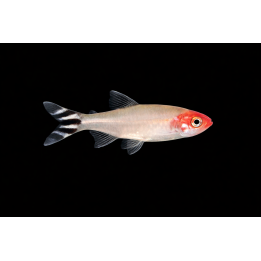
Rummy-Nose Tetra – Hemigrammus rhodostomus – 2.5 to 3 cm
€3.25
Rated out of 5 stars based on
review(s)
Viewed products
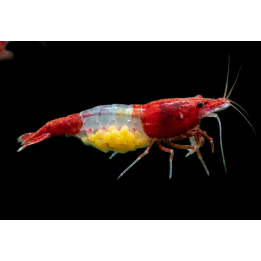
Sakura Rili Shrimp – Neocaridina davidi – Red and Transparent Aquarium Shrimp – 1.5 to 2 cm
€4.99
Rated out of 5 stars based on
review(s)

Clients also bought
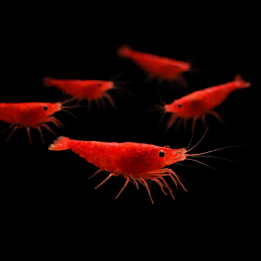
Crevette Sakura Rouge – Neocaridina davidi Red Sakura – 1,5 à 2 cm
€4.95
Rated out of 5 stars based on
review(s)
Snow Zebra Shrimp – Caridina sp. – Sulawesi Shrimp – 1.5 cm – Rare!
€7.95
Rated out of 5 stars based on
review(s)
Comments (0)
Your review appreciation cannot be sent
Report comment
Report sent
Your report cannot be sent